
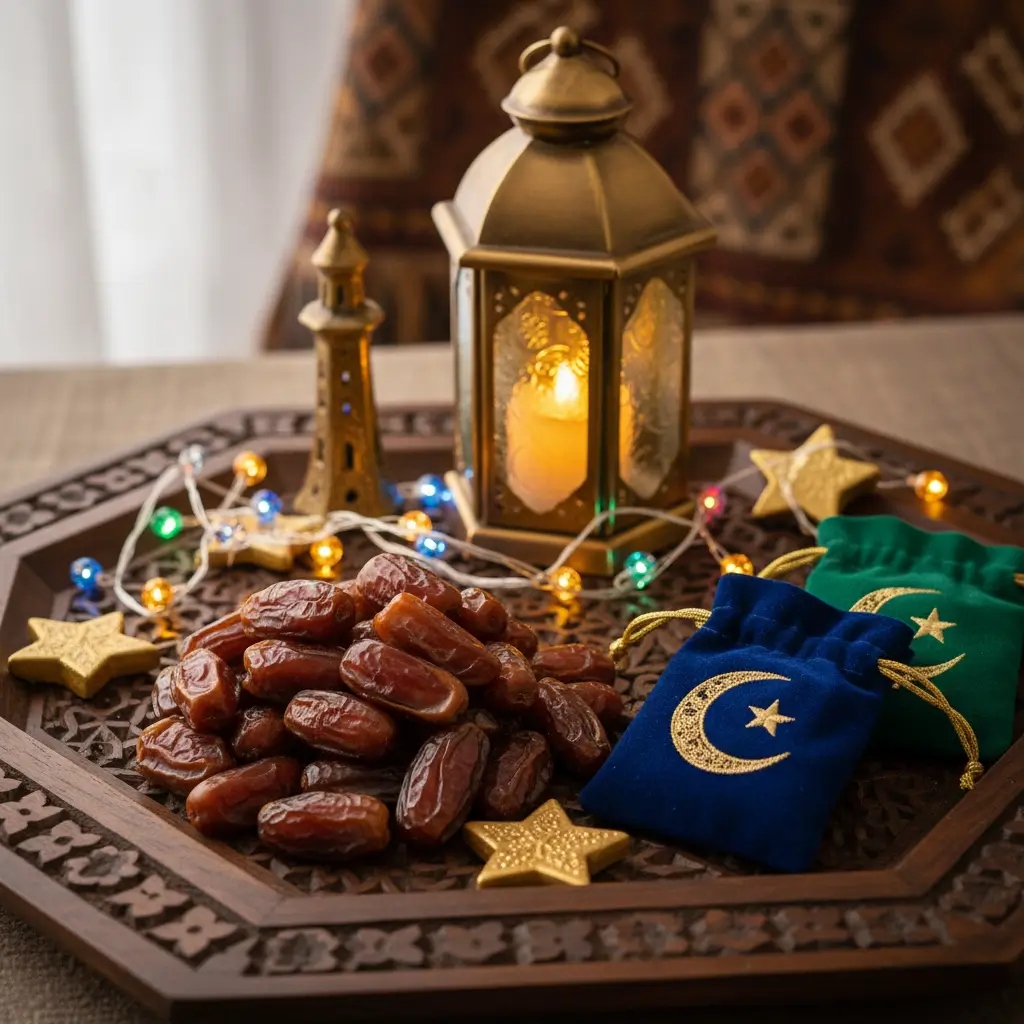
Your Complete Blueprint to
Win Ramadan This Year
A comprehensive, authentic guide for non-Arabic speaking Muslims — covering fasting, prayer, Quran completion, essential duas, and how to maximize every moment of the holiest month.
بسم الله الرحمن الرحيم — In the Name of Allah, the Most Gracious, the Most Merciful.
As the crescent moon of Ramadan 2026 rises on the horizon, nearly two billion hearts around the world turn with hope, intention, and reverence toward the Almighty. Whether you are in London or Lagos, Chicago or Kuala Lumpur — this month calls to you with the same voice it has called every Muslim for 1,400 years.
For non-Arabic speaking Muslims, Ramadan carries a beautifully unique dimension: it is the month of the Quran — a Book revealed in pure, eloquent Arabic, a language many of us do not yet fully understand. And yet, the heart feels it. The soul responds to it. The body surrenders for it.
This guide is written entirely for you. Not just to observe Ramadan — but to win it. Completely. Spiritually. Permanently.
What Is Fasting (Sawm)?
The Linguistic Root
In the Arabic language, the word صوم (Sawm) — pronounced “sowm” — literally means “to stop” or “to abstain.” Even in classical Arabic poetry, it was used to describe a horse that stands still. The beauty of this root reveals the purpose: fasting is about intentional stillness — a deliberate pause from desire.
The Islamic Definition
In Islamic law (Fiqh), Sawm means intentionally abstaining — with a sincere intention (niyyah) — from food, drink, and intimate relations, starting from true dawn (Fajr) until sunset (Maghrib), for the sake of Allah alone.
Fasting during Ramadan is the Fourth Pillar of Islam, obligatory upon every sane, adult, able-bodied Muslim who is not traveling or ill. Those who are exempt — including pregnant women, the elderly, and those with chronic illness — have the option to make up days later or pay Fidyah (a meal given to someone in need for each missed day).
But Fasting Is Far More Than Hunger
Many people reduce Ramadan to a diet — a month without eating during daylight. This misses the entire point. The Prophet Muhammad ﷺ said:
True fasting engages every part of you. Here is how scholars of Islam have described the different dimensions of a complete fast:
Why Do We Fast? The Deep Purpose
This is not a question we need to guess at — Allah answers it directly in the Quran:
The goal is Taqwa — a beautiful, untranslatable Arabic word that describes a state of being permanently aware that Allah is watching, knowing, and present. It is the feeling that guides you to do the right thing even when no one is looking.
How Does Fasting Build Taqwa?
Think about it: during Ramadan, you could easily drink a glass of water in the middle of the day with no one around to see. No one except Allah. And you don’t. That is Taqwa in action. That is the muscle Ramadan builds.
Beyond Taqwa, fasting carries multiple layers of wisdom that scholars, scientists, and philosophers have recognized across centuries:
Gratitude through contrast. When you feel thirst, you suddenly remember that clean water is a blessing — not a given. For millions worldwide, it is neither. Fasting turns your privilege into a prayer of thanks.
Empathy that gives. When your stomach tightens before Iftar, your hand opens for charity. You don’t give out of obligation — you give because you understand, even slightly, what hunger feels like.
Control over self. The Prophet ﷺ described fasting as a shield (Junnah). When you train your body to say no to food and water — the most basic human needs — you gain extraordinary power over lesser temptations too.
Physical renewal. Modern medicine now confirms what Islam established 1,400 years ago: intermittent fasting reduces inflammation, improves insulin sensitivity, and triggers cellular repair processes. The body, like the soul, benefits from rest.
The Immense Rewards of Ramadan
Allah and His Prophet ﷺ did not merely command fasting — they filled the promise of Ramadan with rewards so vast that scholars say the human mind cannot fully grasp their magnitude. Here are the most essential ones:
-
A Reward Directly from Allah — Without Limit In a Hadith Qudsi (Allah’s own words through the Prophet ﷺ): “Every deed of the son of Adam is multiplied — a good deed is worth ten times its equivalent, up to 700 times. Allah said: Except for fasting — it is for Me, and I shall reward it.” (Bukhari). This means no human can calculate the reward for a sincere fast.
-
Complete Forgiveness of Past Sins “Whoever fasts Ramadan with sincere faith and seeking the reward from Allah, his previous sins will be forgiven.” (Bukhari & Muslim). Not some sins — previous sins. This is the reset button Islam offers every single year.
-
An Exclusive Gate in Paradise: Ar-Rayyan “In Paradise there is a gate called Ar-Rayyan. On the Day of Resurrection, only those who used to fast will enter through it.” (Bukhari). A gate reserved for one group only — the people of Ramadan.
-
Every Dua at Iftar Is Accepted “Three people’s supplications are not rejected: the fasting person at the time of breaking the fast, the just ruler, and the oppressed person.” (Tirmidhi). The moment you reach for that date — your dua rises and is not turned away.
-
Laylatul Qadr — 83+ Years of Worship in One Night One night among the last ten days equals more than 1,000 months of worship (Quran 97:3). If you sincerely worship on that night, you have, in the sight of Allah, worshipped for over 83 years.
-
Two Moments of Joy “The fasting person has two moments of joy: when he breaks his fast, and when he meets his Lord.” (Bukhari). The delight of Iftar is a small preview of something much greater coming.
Did you know? Understanding Arabic multiplies every reward.
When you understand the Quran in its original language, your connection to each prayer and verse deepens immeasurably. Alphabet Arabic Academy specializes in teaching non-Arabs exactly this.
Your 30-Day Plan to Win Ramadan
Phase 1: Pre-Ramadan Preparation (Now)
The Prophet ﷺ would begin preparing for Ramadan during the month of Sha’ban — the month before. He fasted more in Sha’ban than any other voluntary month, as if tuning an instrument before a grand performance.
Before Ramadan arrives: make up any missed fasts from last year, review the basic rules of fasting, set your specific goals (how many pages of Quran per day, which duas to memorize), and begin reducing your screen time and social media to create spiritual space.
Phase 2: Daily Spiritual Routine
Here is a structured daily timetable — adjust prayer times to your location using a prayer time app. This is a general framework for a typical Ramadan day:
| Time | Activity | Spiritual Goal |
|---|---|---|
| ~3:30 AM | Wake for Tahajjud (optional but highly rewarded) | Private conversation with Allah |
| ~4:00 AM | Suhoor (pre-dawn meal) — include dates, water, protein | Follow Sunnah, fuel the fast |
| ~4:40 AM | Intention (Niyyah) + Fajr Adhan | Seal the day with obedience |
| ~4:50 AM | Fajr Prayer + Morning Adhkar | Gratitude and protection |
| 5:00–6:30 AM | Quran reading (4–6 pages) — best time of day | Clarity, barakah in the day |
| Morning | Work / school / duties — with frequent dhikr | Mindful worship in daily life |
| ~12:00 PM | Dhuhr Prayer — take a 10-min break no matter what | Anchor to Allah mid-day |
| ~12:30 PM | Qaylulah (short nap if possible) + 4 pages Quran | Recharge for night worship |
| ~3:30 PM | Asr Prayer + reflection time | Accountability before the day ends |
| 5:00–Maghrib | Abundant Dua — this window is time of acceptance | Pour your heart out; don’t miss it |
| Maghrib | Break fast with dates & water → pray Maghrib → eat | Gratitude, not gluttony |
| After dinner | Isha + Taraweeh (8 or 20 rakahs) | Stand with the Ummah in night prayer |
| Late night | Witr + personal dua + 4 pages Quran | End the day in surrender to Allah |
Phase 3: Weekly Themes
The scholars have noted that Ramadan contains three distinct spiritual phases. Structure your month accordingly:
Week 1 — Mercy (Rahmah): Focus on establishing habits. Pray every prayer on time. Begin your Quran reading pace. Ask for Allah’s mercy upon yourself, your family, and the entire Ummah.
Week 2 — Forgiveness (Maghfirah): Increase voluntary prayers and charity. Make sincere Tawbah (repentance). Forgive people who have wronged you — because the one who does not forgive others is hard to forgive.
Week 3 & 4 — Salvation (Itq min al-Nar): Go all out. The last ten days will arrive — be ready. Sleep less. Give more. Seek Laylatul Qadr with every breath.
Complete Prayer Plan for Ramadan
Ramadan multiplies the reward of every prayer dramatically. The five obligatory prayers remain the non-negotiable foundation — but in Ramadan, you have additional opportunities that exist nowhere else in the year.
Taraweeh — The Prayer That Forgives Your Year
The Prophet ﷺ said: “Whoever prays at night in Ramadan, with faith and hoping for reward, his previous sins will be forgiven.” (Bukhari & Muslim). Taraweeh is not an optional extra — it is one of the primary vehicles of forgiveness this month.
Whether you pray in the masjid (congregation is far more rewarding) or at home, pray it. If you get tired, pray 8 rakahs. If you can sustain it, pray 20. The Prophet ﷺ prayed 11 rakahs including Witr but also said: “Night prayer is offered two by two, and if you fear dawn is approaching, pray one rakah as Witr.”
Tahajjud in the Last 10 Nights
In the final ten nights, wake before Fajr and pray Tahajjud. Even two rakahs in the last third of the night — when Allah descends to the lowest heaven asking “Is there anyone seeking forgiveness that I may forgive him?” — carry infinite value. You might be praying on the very night that is Laylatul Qadr.
Four Ways to Complete the Quran in Ramadan
The Quran contains 30 equal sections called Juz (also called “Para”). Each Juz is approximately 20 pages. Reading one Juz per day completes the entire Quran in exactly 30 days — a beloved tradition of Muslims since the time of the Companions.
📌 For Non-Arabic Speakers: A Practical Note
If you cannot read Arabic yet, read the Quran in transliteration while you practice Arabic letters — and always read alongside a translation. Reading the Quran in translation and reflecting deeply is far more beneficial than rushing through Arabic letters without understanding. Both are valuable; choose based on your current level.
The goal is connection, not speed.
Method 1 — The 4-Pages-Per-Prayer Method (Easiest)
Read exactly 4 pages after each of the 5 daily prayers. That’s 20 pages daily — one complete Juz. After 30 days, you have read the entire Quran. This method is popular because it anchors Quran reading to prayer times, making it impossible to forget.
Method 2 — The Morning & Evening Method
Read 10 pages after Fajr in the peaceful morning hours, and 10 pages after Taraweeh before sleep. This two-session approach suits people with busy daytime schedules.
Method 3 — The Busy Professional Method
If work or family responsibilities are heavy, combine listening with reading. Listen to one Juz per day during your commute with a verified reciter (Sheikh Abdul Rahman Al-Sudais or Sheikh Mishary Al-Afasy are excellent choices), and read 10 pages during breaks. Supplement with listening to Taraweeh at the masjid where the imam recites one Juz nightly.
Method 4 — The Reflective Method (Tadabbur)
For those who prefer depth over speed: read half a Juz (10 pages) per day — slowly, with a translation, pausing to reflect on meaning. You will complete the Quran in 60 days, but the understanding you gain will transform your prayer for life. This is especially powerful for non-Arabic speakers new to the Quran.
| Period | Days | Juz (Parts) | Pages/Day | Notable Surahs |
|---|---|---|---|---|
| Week 1 — Mercy | Days 1–7 | Juz 1–7 | ~20 pages | Al-Fatihah, Al-Baqarah, Al-Imran |
| Week 2 — Forgiveness | Days 8–14 | Juz 8–14 | ~20 pages | Al-A’raf, Al-Anfal, Al-Tawbah |
| Week 3 — Salvation | Days 15–21 | Juz 15–21 | ~20 pages | Al-Isra, Al-Kahf, Maryam, Ta-Ha |
| Last 10 Nights 🌙 | Days 22–30 | Juz 22–30 | ~20 pages | Yasin, Al-Waqiah, Al-Mulk, Al-Qadr |
Trusted Quran Sources — Online & Offline
Use verified, scholarly-approved platforms to ensure the accuracy of the Quran text and translations you read:
Essential Duas for Ramadan
The Prophet ﷺ said: “Dua is worship itself.” (Abu Dawud, Tirmidhi). Ramadan is the month when dua is most powerful — especially at Iftar, in Suhoor, during Taraweeh, and in the last ten nights. Here are the most important ones to keep on your tongue:
Reading duas in Arabic makes them more powerful for you.
When you understand what “Afuwwun” means and feel it — not just recite it — your dua transforms. This is exactly what Alphabet Arabic Academy teaches: Quranic Arabic that changes how you worship.
The Last 10 Nights — The Heart of Ramadan
Laylatul Qadr — Better Than a Thousand Months
Allah says in the Quran: “The Night of Decree is better than a thousand months.” (Quran 97:3). That is more than 83 years. One night of sincere worship on Laylatul Qadr, if accepted, equals a lifetime of devotion.
What Did the Prophet ﷺ Do in the Last Ten Days?
This is not speculation. Aisha (RA), who knew the Prophet ﷺ better than anyone, described his practice precisely:
Three actions are embedded in this hadith: intensified personal worship, commitment to night prayer throughout the entire night, and bringing his family along on the journey. He did not just become more spiritual — he changed his entire schedule and domestic life around these ten days.
How to Seek Laylatul Qadr
The Prophet ﷺ said: “Seek Laylatul Qadr among the odd nights of the last ten days of Ramadan.” (Bukhari). Focus especially on these five nights:
The 27th night is most commonly mentioned by scholars based on various hadiths and the scholarly consensus, though the night is kept hidden by Allah so that believers seek all odd nights with equal sincerity.
What to Do Each Night
🌙 Practical Night Worship Schedule for Last 10 Nights
After Isha + Taraweeh (10–11 PM): Rest briefly (1–2 hours). This is not laziness — it is preparation.
~1:00–3:30 AM: Wake for Tahajjud. Pray 4–8 rakahs. Read Quran. Make long, personal dua in any language you know. Cry if you can.
~4:00 AM: Suhoor. Make intention. End with Witr if not already prayed.
Fajr: Pray and remain in place making dhikr until sunrise — this alone carries the reward of a complete Hajj and Umrah. (Tirmidhi)
What Breaks Your Fast — and What Does Not
This is one of the most frequently asked questions — especially by new Muslims and those without a local community to ask. Here is a clear, scholar-verified overview:
✗ THESE BREAK THE FAST (Invalidate it)
- Intentionally eating or drinking anything
- Intentionally vomiting
- Sexual intercourse (also requires Kaffarah)
- Intentional ejaculation due to stimulation
- Menstruation or post-childbirth bleeding
- Nutritional IV drips or injections
- Smoking (anything inhaled intentionally)
✓ THESE DO NOT BREAK THE FAST
- Forgetting and eating (unintentional eating)
- Rinsing mouth/nose (without swallowing)
- Swallowing natural saliva
- Eye drops, ear drops, or nasal sprays
- Medical injections (insulin, vaccines, blood tests)
- Applying kohl, perfume, or lotion
- Brushing teeth (without swallowing toothpaste)
- Unintentional vomiting
- Taking a shower or swimming
- Wet dreams (night emissions)
Important: What Does NOT Break the Fast But DESTROYS Its Reward
The following do not legally invalidate your fast — meaning you don’t need to make it up. However, they eliminate the spiritual reward and may leave you with nothing but hunger and thirst. The Prophet ﷺ warned: “There are people who fast and get nothing from their fast except hunger and thirst.” (Ibn Majah)
Backbiting (speaking about someone in a way they would not like), spreading rumors, lying, arguing aggressively, looking at forbidden content, listening to music, and overeating at Iftar to the point of sluggishness for Taraweeh — all of these hollow out the fast from the inside. The body abstains from food; the soul should abstain from sin.
If someone provokes you while you are fasting, the Prophet ﷺ taught a specific response: “I am fasting, I am fasting.” Say it twice — once to remind them, and once to remind yourself.
The Spirituality of Ramadan: What the Month Actually Feels Like
Information and schedules are important — but they are the skeleton, not the soul, of Ramadan. Let us speak for a moment about what this month actually feels like when you live it fully.
The Hunger That Feeds the Soul
There is a paradox at the center of Ramadan: as the stomach empties, something in the heart fills. By the second week, experienced fasters report a lightness — a kind of clarity that doesn’t come in ordinary months. Scholars of spirituality describe it as the lifting of the “veil of the self” that ordinarily separates us from our deeper connection to God.
The Pre-Fajr Silence
There is a particular quality to the world at 4:00 AM in Ramadan. The streets are quiet. Your family is asleep. The food is in front of you, and in a few minutes you will put it down until sunset. In that silence, something becomes possible that doesn’t happen when the world is loud. Many Muslims describe Suhoor as the most spiritually potent moment of their entire day.
The Unity of the Global Ummah
At the exact moment you break your fast, Muslims in your city, your country, and across every continent are breaking theirs too. The same dates. The same dua. The same sunset. There is something profoundly moving about belonging to a community of nearly two billion people connected by one act of surrender. You are never alone in Ramadan.
Dhikr as Breathing
In Ramadan, the most productive Muslims do not only worship in scheduled blocks — they turn their entire day into a stream of consciousness with Allah. SubhanAllah while walking. Alhamdulillah while working. Allahu Akbar when something surprises them. La ilaha illallah as they fall asleep. Dhikr is not a task to complete — it is a frequency to stay tuned to.
The Quran Comes Alive
Non-Arabic speakers often describe a specific experience in Ramadan: hearing the Quran recited in Taraweeh and feeling moved — even without understanding every word. The sound of the Arabic carries something. Scholars say this is because the Quran speaks to the Fitrah, the innate spiritual nature Allah embedded in every human soul. Imagine adding understanding to that feeling.
What If Next Ramadan You Could Understand Every Word?
You have felt the Quran move your heart in Taraweeh — even without knowing Arabic. Now imagine standing in prayer next Ramadan and understanding exactly what the imam is reciting. Feeling the grammar emphasize a point. Knowing why a specific word was chosen by Allah.
This is not a dream. This is what learning Arabic does. And it begins with a single step.
Don’t let the momentum of Ramadan fade. Channel it into the greatest gift you can give your faith.
Carrying the Spirit Forward
The days of Ramadan pass faster than any other month. Every experienced Muslim will tell you: on the first of Ramadan, the last ten nights feel far away. And then suddenly, they are here. And then they are gone.
The Prophet ﷺ gave us a warning that is both gentle and sobering: “Perhaps a fasting person will gain nothing from his fast but hunger and thirst.” (Ibn Majah). This is not meant to discourage — it is meant to wake us up while there is still time to choose otherwise.
Let this Ramadan 2026 be the one where you do not just survive the month — you are transformed by it. Where you do not just read the Quran — you feel it rearrange something inside you. Where you do not just pray Taraweeh — you stand before Allah with tears you didn’t know you had.
And when the crescent moon of Shawwal rises and Eid fills the air with Takbir, let your heart carry two things forward: the hope that your deeds were accepted, and the intention to never return to who you were before Ramadan began.
May Allah accept your fasts, your prayers, your tears, and your sincere intentions. May He grant you Laylatul Qadr and forgive what came before it. May He make the Quran the spring of your heart, the light of your chest, and the companion of your soul in this life and the next.
رَمَضَانُ مُبَارَكٌ — Ramadan Mubarak 2026